

An ape doesn’t slip quietly into a dream. It watches you, moves with real intention, and often feels a little too aware for comfort, which is probably why dreaming apes tends to stick with people well past waking up.
Dreaming apes generally points to instinct, intelligence, strength, imitation, social behavior, curiosity, freedom, or emotions you haven’t fully controlled yet. Apes sit in an unusual spot symbolically, close enough to human behavior that they can reflect your own instincts and thinking, while still carrying the raw, unfiltered energy of a wild animal. Which of these applies to you depends heavily on what the ape was doing, how you felt during the dream, where it showed up, whether it was alone or part of a group, and what’s actually happening in your life right now.
Some ape dreams read as clearly positive, tied to intelligence, curiosity, or real strength. Others lean cautionary, pointing to aggression, restlessness, or a loss of control. Most sit somewhere in between, genuinely neutral until you add your own context. Spiritually, dreaming apes can be read as encouragement to trust your instincts or reconnect with your own inner wisdom. Psychologically, it often reflects something more grounded: subconscious instinct, imitation, or a reaction you haven’t fully processed. Biblically, this needs care, since scripture doesn’t hand out a fixed meaning for apes appearing in a dream.
None of this makes a dream about an ape an automatic prophecy or a guaranteed prediction about your future. The most useful approach is simple: notice the ape’s behavior, your emotional response, and how closely it lines up with something already happening in your waking life.
What Does Dreaming Apes Mean?
The General Meaning of Apes in Dreams
- Instinct & Primal Behavior: Closer to the surface than usual
- Intelligence & Awareness: Heightened perception
- Strength & Dominance: Yours or someone else’s
- Curiosity & Social Dynamics: Group influence and restriction
Why the Context of the Dream Matters
The same ape can carry almost opposite meanings depending on its behavior, its surroundings, and how you felt. A calm ape observing you from a distance and an aggressive ape charging at you point in very different directions, even though both are technically the same kind of dream.
Quick Interpretation Table
| Dream Detail | Possible Meaning |
| Calm ape | Confidence, awareness, curiosity |
| Aggressive ape | Conflict, anger, intimidation |
| Ape chasing you | Avoidance, pressure, fear |
| Ape in cage | Restriction, suppressed instinct |
| Group of apes | Social pressure, community, belonging |
| Baby ape | Vulnerability, growth, curiosity |
| Talking ape | Inner thoughts, unusual insight |

Spiritual Meaning of Dreaming Apes
Instinct and Primal Energy
An ape reconnects you with instinct that’s easy to override in ordinary life, a nudge to trust a gut reaction you’ve been second-guessing.
Intelligence, Awareness and Inner Wisdom
Apes are widely known for problem-solving and awareness, which lines up with a spiritual reading centered on inner wisdom already available to you.
Strength, Power and Personal Courage
A strong or dominant ape often reflects courage you already have, even if you haven’t fully claimed it yet.
Curiosity and Discovery
An exploring, curious ape points toward genuine discovery, a part of your life you haven’t fully investigated.
Social Connection and Group Influence
Apes are deeply social animals, so a group setting in the dream often reflects your own relationship with community and belonging.
Freedom, Control and Restriction
Whether the ape is free or caged shifts this reading directly toward either liberation or a real sense of being held back.
When Could an Ape Dream Have Spiritual Significance?
Some ape dreams feel unusually vivid or emotionally loaded. That’s worth sitting with, but it’s genuinely a matter of personal reflection, not a guaranteed supernatural message.
Biblical Meaning of Dreaming Apes
Does the Bible Give a Specific Meaning to Apes in Dreams?
No. Scripture doesn’t provide a fixed dream dictionary saying an ape always means one particular thing. Apes are mentioned only once in the Bible, in 1 Kings 10, listed among the exotic cargo brought back on King Solomon’s trading ships, purely a historical trade record, not a symbolic reference.
What Biblical Principles Can Help Interpret the Dream?
Even without a direct verse, real biblical themes are available: wisdom and discernment, self-control, humility, honest reflection on human nature, the value of creation, and resisting destructive behavior.
Ape Dreams and Christian Reflection
A Christian can treat an ape dream as a genuine opportunity for reflection and prayer, rather than automatically declaring it a divine message.
Important Biblical Caution
It’s worth being careful here. Presenting invented symbolism as guaranteed biblical interpretation isn’t honest to what scripture actually says, and it can create unnecessary fear.
Psychological Meaning of Dreaming Apes
What Apes May Represent in the Subconscious
In dream psychology, this kind of dream often surfaces when your subconscious is processing something closely tied to instinct, behavior, or how you relate to others.
Instinct vs Rational Thinking
An ape can reflect the tension between reacting instinctively and thinking something through carefully, especially if you’ve been under real pressure to decide quickly.
Social Behavior and Imitation
Because apes are known for imitation, this dream sometimes points to copying someone else’s behavior, consciously or not.
Power, Intimidation and Aggression
An aggressive ape often mirrors feeling intimidated by someone, or noticing your own aggression surfacing somewhere unexpected.
Repressed Emotions and Primitive Reactions
A wild or uncontrolled ape can reflect emotions you’ve been suppressing, ones that feel more instinctive than reasoned.
Personal Associations With Apes
Someone who works with animals, or has a specific memory involving an ape, will likely read this dream differently than someone with no direct experience at all.
Spiritual vs Psychological Interpretation
Psychological interpretation locates the ape’s meaning inside your own mind. Spiritual interpretation treats it as a possible message from beyond yourself. Neither cancels out the other.
Dreaming Apes Based on Their Behavior
- Friendly or calm ape: trust, curiosity, and a generally positive emotional state.
- Aggressive ape: conflict, anger, or tension building somewhere in your life.
- Ape attacking you: feeling overpowered or genuinely threatened by something specific.
- Ape chasing you: avoidance, something you’ve been putting off that’s catching up.
- Ape following you: a persistent issue that keeps demanding your attention.
- Ape watching or staring at you: self-awareness, or the sense of being observed or judged.
- Talking ape: inner thoughts surfacing, or an unusual insight worth paying attention to.
- Running or free ape: freedom, momentum, or real progress.
- Ape in a cage: restriction, suppressed instinct, or feeling boxed in.
- Baby ape: vulnerability, growth, or something new and still developing.
- Injured or dead ape: an ending, weakened strength, or a genuine transition.
- Group of apes: social pressure, community, or several concerns arriving at once.
Dreaming Apes in Different Places
- Ape in your house: a personal or family matter moving closer to home.
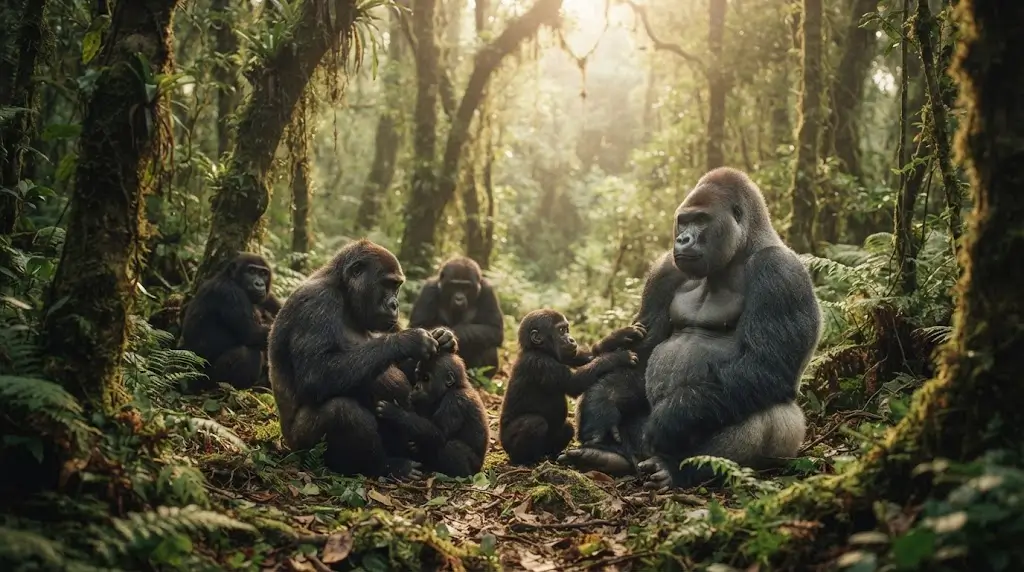
- Ape in a jungle or forest: instinct and freedom in their most natural setting.
- Ape in a zoo: restriction, or an instinct being observed rather than expressed.
- Ape at work or in a public place: social pressure or instinct surfacing somewhere unexpected.
- Ape near water: instinct meeting emotion, often tied to something you’re feeling but haven’t said.
- Ape in an unknown place: uncertainty about where this instinct or feeling actually belongs in your life.
Dreaming Apes Based on Number and Relationship
- One ape: individuality, a personal theme specific to you.
- Two apes: partnership, or a relationship dynamic worth examining.
- Many apes: social pressure, community, or feeling outnumbered by concerns.
- Ape with its young: family, protection, and responsibility.
What Dreaming Apes May Mean in Different Areas of Life
- Love and relationships: honesty about instinct, attraction, or unspoken tension.
- Career and money: ambition, competition, or adapting quickly to new demands.
- Personal growth: confronting instinct directly instead of ignoring it.
- Stress, conflict and emotional life: pressure that’s building faster than you’re processing it.
Is Dreaming Apes a Positive or Negative Sign?
| Positive Interpretation | Cautionary Interpretation |
| Intelligence | Impulsiveness |
| Strength | Aggression |
| Curiosity | Restlessness |
| Freedom | Lack of control |
| Social connection | Peer pressure |
| Adaptability | Imitation |
The emotional tone of the dream usually matters more than the ape itself. The same behavior can read as confident or threatening depending entirely on how it felt.
How to Interpret Your Own Dreaming Apes Experience
- What was the ape doing?
- How did you feel?
- Where did the dream happen?
- Was the ape alone or with others?
- What happened immediately before or after?
- What situation in your waking life feels similar?
- Which trait of the ape feels most relevant to you?
Quick Personal Interpretation Formula
Ape behavior plus your emotion plus dream setting plus your waking-life situation equals the strongest interpretation.

A Real-Life Example of Dreaming Apes
Illustrative Example, not a verified personal account.
Dreaming Apes While Dealing With an Intimidating Coworker
Picture someone navigating a tense work relationship with a coworker who was unpredictable and hard to read. In the dream, an ape watched them silently from a distance, never approaching, never leaving either.
The dreamer woke up uncomfortable but strangely curious rather than afraid. Read through dreaming apes, the watching, non-threatening ape lined up closely with a real feeling of being observed and unsure what to expect next at work. The practical takeaway wasn’t a warning. It was a clearer name for a discomfort they’d been feeling but hadn’t fully identified.
Why You Keep Dreaming Apes Repeatedly
Recurring dreaming apes usually points to unresolved emotional conflict or a theme that hasn’t been fully addressed. Repeated social pressure, fear, anger, or a loss of control can all show up this way, especially during a stretch of life where the same situation keeps circling back. If the same ape shows up in different settings, notice what changes each time. A simple dream journal, tracking behavior, setting, and emotion, tends to reveal the real pattern faster than memory alone.
Common Mistakes When Interpreting Dreaming Apes
- Assuming every ape means aggression, regardless of behavior
- Ignoring the dreamer’s actual emotions during the dream
- Treating symbolism as universal rather than personal
- Confusing spiritual reflection with certainty
- Assuming every unusual dream is prophetic
- Ignoring personal experiences with apes or animals generally
Bible Verses for Reflection on Wisdom, Self-Control and Discernment
These verses aren’t about apes specifically, but they’re genuinely useful for anyone processing dreaming apes through prayer. James 1:5 promises wisdom to anyone who asks God for it directly, useful if the dream left you more curious than clear. Galatians 5:22-23 lists self-control among the fruits of a grounded spiritual life, a fitting theme if the dream involved something aggressive or hard to control. Joshua 1:9 is a direct call to be strong and courageous, useful if the dream left you thinking about confronting something difficult. Philippians 2:3 calls for genuine humility, a steady posture for anyone reflecting honestly on their own instincts.
Frequently Asked Questions About Dreaming Apes
What does Dreaming Apes mean?
Dreaming apes usually points to instinct, intelligence, strength, or social behavior, with the exact reading shaped by the ape’s behavior and your emotional response.
What is the spiritual meaning of Dreaming Apes?
Spiritually, dreaming apes often represents instinct, inner wisdom, courage, or a nudge toward genuine self-reflection.
What is the biblical meaning of Dreaming Apes?
The Bible mentions apes only once, in 1 Kings 10, as part of a historical trade record, so there’s no fixed biblical meaning for ape dreams specifically.
What does it mean to dream about an aggressive ape?
This generally reflects conflict, anger, or intimidation, either coming from you or from someone else in your life.
What does it mean when an ape chases you in a dream?
It typically points to avoidance, pressure, or fear, something catching up with you that you’ve been putting off.
Is Dreaming Apes a good or bad sign?
Neither automatically. The emotional tone of the dream matters more than the animal itself.
Why do I keep dreaming about apes?
This kind of recurring dream usually points to unresolved emotional conflict or a life theme that hasn’t fully settled yet.
A Short Christian Prayer or Reflection
God, where instinct and reason are pulling in different directions, give me wisdom to tell them apart. Help me stay grounded in self-control instead of reacting out of fear or pressure, and give me peace to understand what I’m actually feeling rather than pushing it aside.
Final Thoughts on Dreaming Apes
The meaning of dreaming apes is never determined by the animal alone. Its behavior, your emotions, the setting, your personal associations, and your current life circumstances together provide the strongest clues.
Write down the dream, identify the strongest emotion you felt, and connect that emotion to something currently happening in your waking life. That single step will get you closer to the real meaning than any fixed definition of dreaming apes ever could.
If you’re curious how other wild animals show up in dreams, the tiger dream meaning guide and the Wild Animals collection are worth exploring alongside this one.